UN Tech Policy in Review Ahead of 80th Year
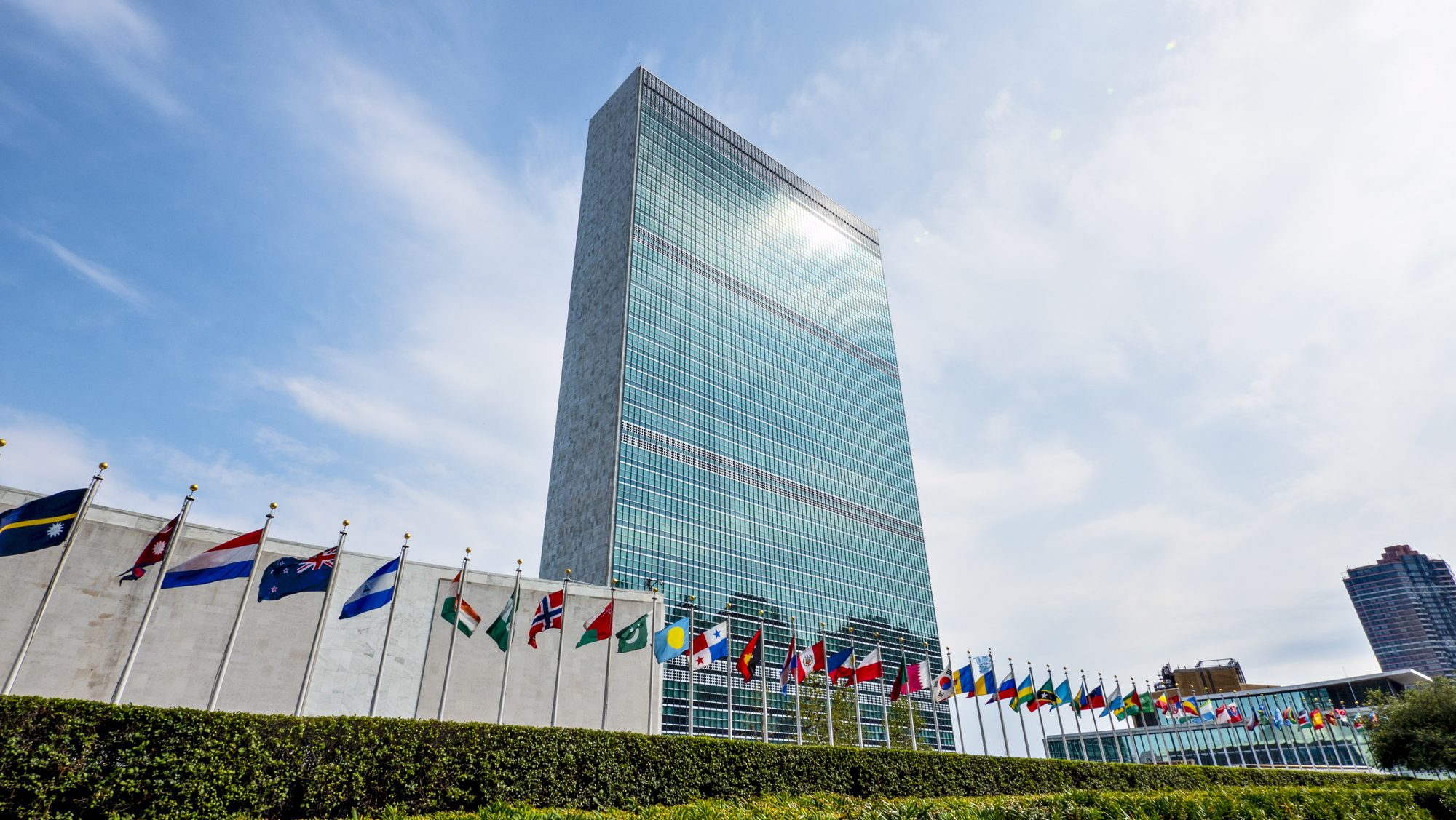
On September 22, world leaders will gather in New York City for the High-Level Week of the 80th Session of the UN General Assembly. While the summit will produce its usual outcomes on the topics of sustainable development and international peace and security, UNGA 80 will also mark a stocktaking of the UN system’s foray into the technology policy space.
The UN’s role in shaping international technology policy is unique. Regulation remains the purview of member states, and the UN cannot produce binding requirements on the development and deployment of next-generation technologies. However, the UN holds a distinct advantage through its convening power and ability to articulate high-level principles. UNGA provides a critical platform for the UN’s 193 member states to engage with civil society and industry, which is especially important for technology issues, given the internet’s multistakeholder foundations and the role of industry in driving innovation. Achieving consensus on principles at the UN level is all the more important to avoid a fragmented global regime that undermines the scalability of inherently global technologies and risks a kind of “Galapagos effect.” While such principles may lack the force of national regulation, they can diffuse across borders and help shape regulatory philosophies globally, in ways that could soon rival, if not outpace, the Brussels effect. Policymakers aiming to shape the governance of AI, cloud computing, e-commerce, and other emerging technologies will need to remain actively engaged in New York and Geneva, or risk having the rules set without them.
UNGA 80 caps off a significant year of progress in the UN’s digital portfolio. One year ago, UN Member States signed the Global Digital Compact, a landmark declaration outlining broad principles for technology policy and its relationship to the development goals. Since then, the GDC has begun implementation, with significant work on the AI and data flow workstreams.
This summer, the member states of the UN agreed to the terms of reference and modalities for two new bodies relating to AI. The first, the Scientific Panel on AI, similar to the International Panel on Climate Change, convenes recognized experts in AI to develop annual reports that synthesize research on the opportunities, risks, and impacts of AI. The second, the Global Dialogue on AI Governance, will assemble diverse stakeholders to share best practices on AI governance. The degree to which these forums will be implemented in line with their mandate will be determined in the coming months, but if developed properly, they could provide an opportunity to foster global cooperation in rapidly developing AI technologies. Their effectiveness will depend on sufficient staffing, inclusivity, and, particularly for the Dialogue, a commitment to advancing broad principles rather than rigid prescriptions that may quickly lose relevance in the fast-moving field of AI and across diverse national contexts.
Relatedly, this summer also saw the establishment of the Working Group on Data Flows, housed under the Commission on Science, Technology, and Development. With 54 members representing a diverse coalition of member states, industry, academia, and international organizations, the Working Group is tasked with issuing recommendations on interoperable data governance arrangements by UNGA 81 in 2026. While its deliberations are already underway, the prospect of a best practices document to capture lessons from global data governance efforts is especially important for the digital economy. As digital trade expands across sectors, predictable and interoperable data frameworks will be essential for sustaining growth. Although bodies like the OECD, through its Data Free Flow with Trust initiative, or APEC, through its Cross-Border Privacy Rules, are better positioned to advance concrete implementation, the UN’s convening power gives it the ability to shape global norms. Whether its influence proves constructive will hinge on whether the final report promotes best practices that facilitate cross-border data flows for development, or instead validates data localization measures that risk stifling growth, weakening cybersecurity, and enabling digital repression.
The Global Digital Compact and its AI and data workstreams remain the major thrust of the UN’s approach to tech policy, but they advance in parallel to other key processes.
On internet governance, the 20-year review of the World Summit on Information Society (WSIS+20 Review) is ongoing. The initial draft outcome document is encouraging, reaffirming the multistakeholder model and recommending that the Internet Governance Forum be made permanent. Still, the process is unfinished and vulnerable to efforts that seek to replace the internet’s decentralized governance with state-led models that could enable authoritarian control.
On cybersecurity, the UN Cybercrime Convention, adopted in December 2024, will open for signature in October 2025. The treaty grants states sweeping surveillance and investigative powers applicable to nearly any “serious crime,” as defined domestically. In its current form, it legitimizes authoritarian governments’ ability to extend criminal laws extraterritorially, targeting foreign journalists, activists, and businesses without meaningful human rights safeguards. While the text is final, a narrow window remains for stakeholders to urge governments not to sign or ratify.
Finally, while not considered strictly tech policy, the UN Tax Convention is under negotiation, set to conclude by UNGA 81 in 2026. A dedicated workstream focuses on taxing income from cross-border services in an increasingly digitalized economy. Early discussions have raised nexus rules that do not require physical presence, and some delegations have debated digital services taxes. Given the parallel OECD negotiations on Pillar One and Pillar Two of the Global Minimum Tax Framework, the UN process should align with OECD efforts to avoid creating conflicting principles that could fragment global tax cooperation and deter participation.
The UN is already serving as a forum where tech policy issues are being actively shaped. For both governments and industry, sustained engagement with the UN will remain critical to ensuring that its outcomes advance open, secure, and interoperable digital policy rather than enabling restrictive or fragmented approaches.