Space-based Data Centers: Unlocking the Final Frontier of Big Data
With the rapid growth of the commercial space market and the recent leaps in space technology, we are now generating an unprecedented amount of data from space. For instance, Planet Labs reported in 2023 that their imaging constellation downlinked more than 30 terabytes of data daily. The data requirements for future Earth observation satellite constellations, in-space servicing, assembly, and manufacturing (ISAM) operations, and cis-lunar operations are expected to far exceed what current data relay networks can handle. And with a 2023 NASA report finding that their Deep-Space Network is already facing a 40% oversubscription rate and an expected 10x increase in demand by 2030, these data bottlenecks are rapidly becoming serious strategic risks. Many view the solution to these problems will be space-based data centers.
Space-based data centers can help with our data problems by providing edge computing capabilities for in-space operations. For instance, Earth observation satellites can run AI processing in orbit to reduce the amount of raw data being beamed to ground stations. Automated ISAM and lunar operations can be run through orbital and cis-lunar AI data centers with lower latency. And by deploying data centers to sun-synchronous orbits, companies can take advantage of near-continuous access to solar energy with no atmospheric obscuration, to generate up to 40 times more energy than a ground-based solar system.
Major companies such as Google and SpaceX are exploring the technology with the hope of taking advantage of the abundant solar energy that promises to power the next generation of AI. While there are still a lot of challenges to overcome to make these a reality, that reality may come sooner than you think.
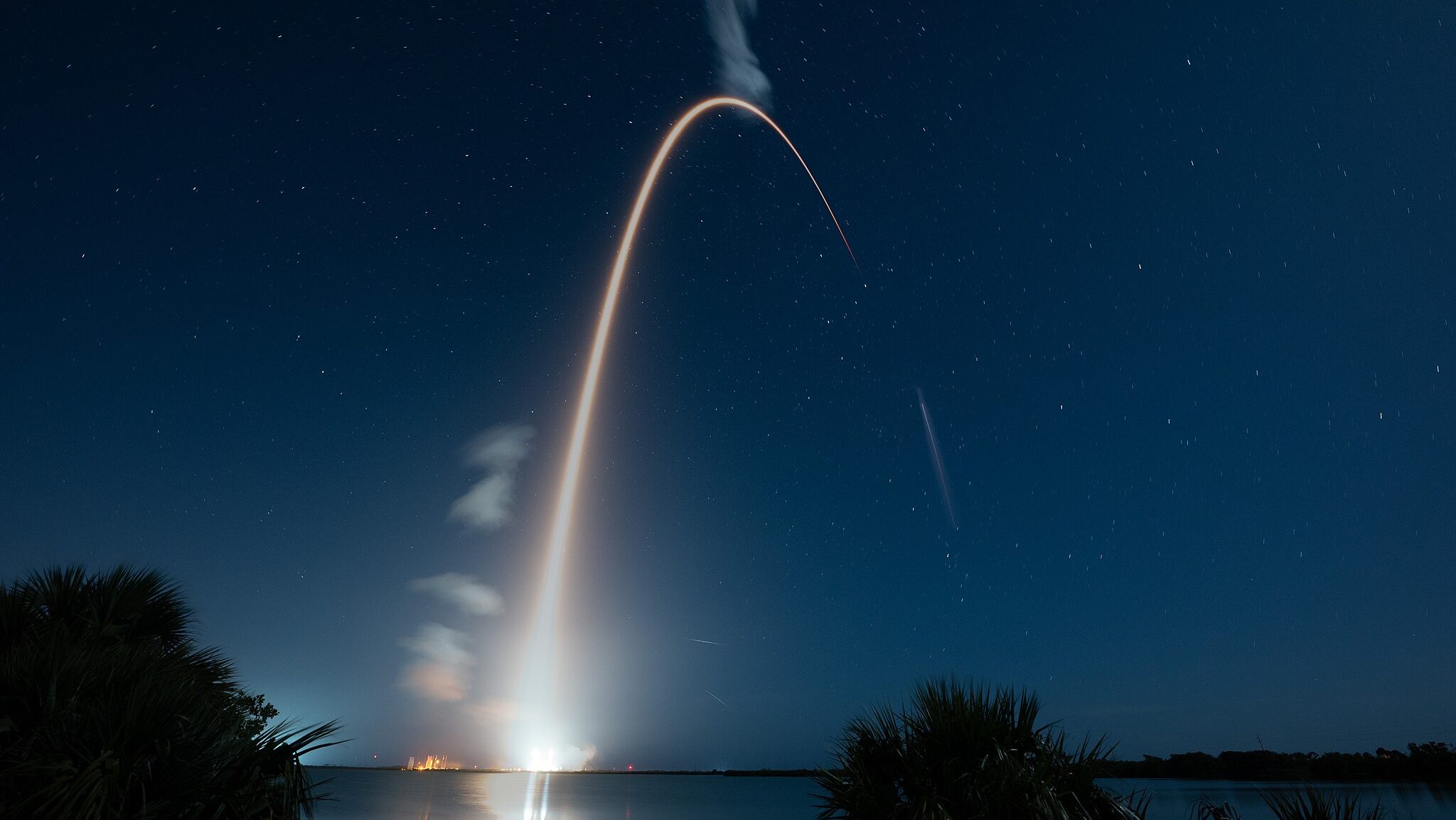
While space-based data centers are promising, there are various technical and policy challenges to making the technology a reality. Small scale edge computing has been demonstrated in space, however, creating large scale, dedicated data centers will require the ability to launch more (and larger) assets into space. While launch rates and payload capacity have grown dramatically over the past few years, the industry demand is already greater than launch availability and mass production of space-based data centers will only continue to exacerbate the demand. With the onset of new rockets such as Starship and New Glenn and with reforms to spaceport and launch policy, those demands can be met.
Constructing large scale data centers in space will require advanced ISAM capabilities. Some satellite servicing capabilities have been demonstrated and several companies are planning to launch ISAM missions over the next few years as the technology continues to develop. In the meantime, distributed architectures where several satellites work in conjunction with one another could offer a modular, scalable solution. These satellites could either travel in a swarm pattern, as demonstrated by NASA’s Starling mission, or be distributed in a more traditional satellite constellation pattern across one or more orbital planes.
The potential use of data centers in orbit, particularly those in a distributed architecture, will create a large increase in both ground-to-space and space-to-space communications. In 2024, the Federal Communications Commission released a notice for proposed rulemaking for ISAM licensing. However, this might only cover some technical needs of space-based data center assembly and operations. There is more work to be done to enable a balanced licensing framework to protect the up/downlink needs of space-based data centers and other space assets from harmful interference while operating in shared or adjacent frequency bands.
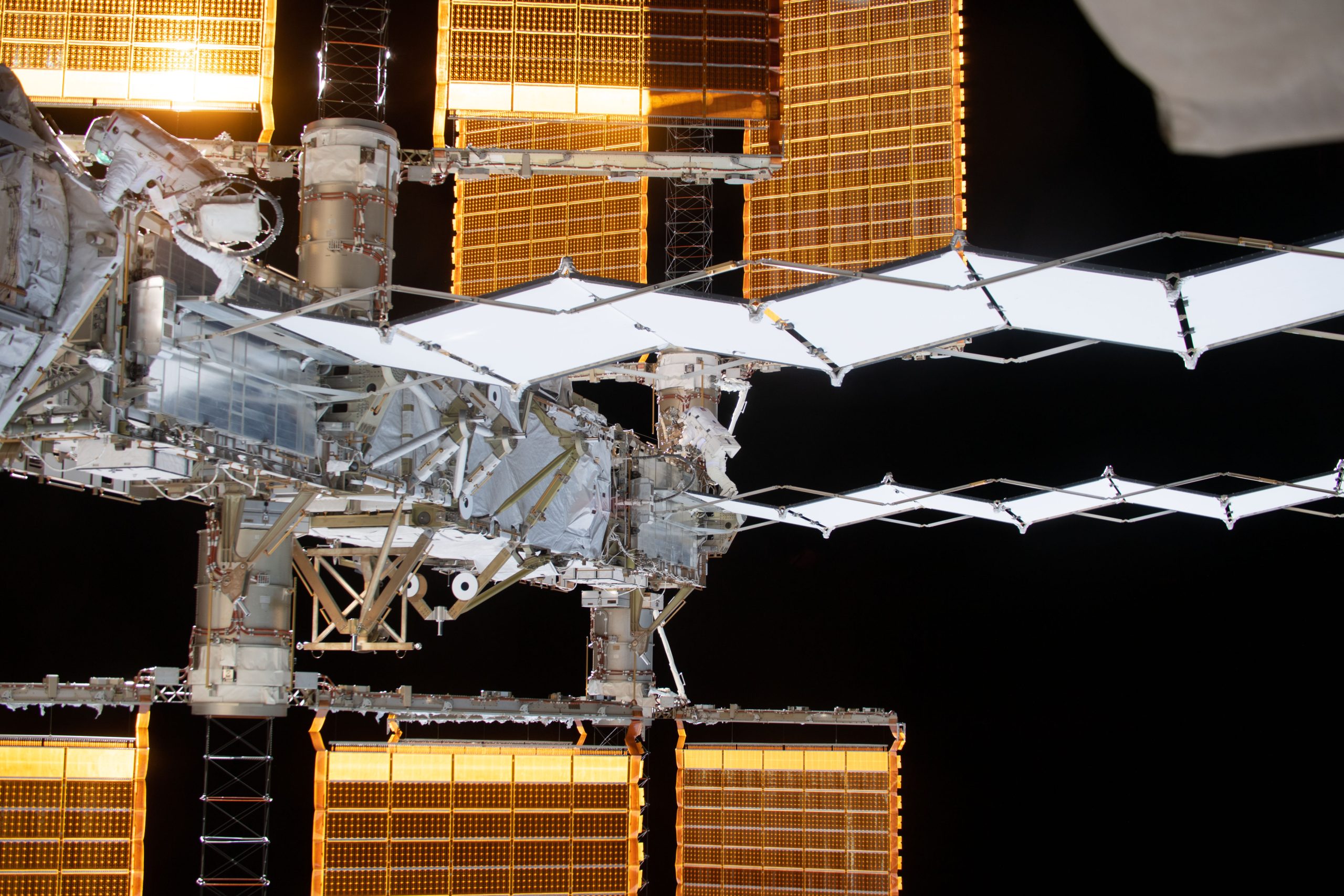
The key technology that will need to be developed to truly unlock space-based data centers is a more efficient radiative cooling unit. Traditional data centers use convective cooling: using air or water to draw heat away from servers. But space is a vacuum; there is no medium that can be used to convectively cool a data center. Currently cooling in space is done using radiators, which converts the heat into infrared radiation that can then be directed away. However, radiators require a large surface area in order to disperse enough energy to keep data centers at the optimal temperature. Using current-gen radiator technology for large scale data centers would significantly increase launch costs and limit available payload space. New heavy lift vehicles such as Starship could alleviate some of this with their large payload capacities, but further development of lighter, more efficient radiators will be necessary to fully unlock the capabilities of space-based data centers.
While the challenges are many for space-based data centers, they are solvable with public and private investments in critical technology R&D and with an efficient, innovation-friendly approach to licensing for spectrum use and mission authorization. By tackling those challenges now we can prevent future data bottlenecks for space operations and fully unlock the final frontier of big data.