
The Future of Communications to be Decided in Shanghai

In a previous DisCo post, I emphasized the critical importance of United States leadership and engagement within the International Telecommunication Union (ITU), particularly concerning the World Radiocommunication Conference (WRC) process. And while the next conference, WRC-27, may seem distant, the time for preparatory international coordination and rigorous technical studies is rapidly shrinking.
We are currently in the study phase of the WRC cycle, which is centered on defining the precise technical parameters and studies required for each agenda item. The in-depth discussion of these studies will occur within the ITU-R working parties in 2026. All necessary technical studies are slated for completion by late 2026. This tight schedule means that stakeholders with interests in any of the agenda items must become actively involved as soon as possible.
WRC-27 is 80% space, yet its impact is not limited to far-off future technologies. It will directly affect current and emerging technologies and economies. From direct-to-device communications to the foundational framework for lunar operations, the future of this critical spectrum and the subsequent regulatory guidelines will be determined in Shanghai. To effectively participate in this vital process, stakeholders must possess a deep understanding of the technical and economic implications of each agenda item.
Modernizing Connectivity: EPFD and Direct-to-Device
I have previously underscored the need to modernize Equivalent Power-Flux Density (EPFD) limits. Despite efforts from the non-geostatorionary satellite industry, WRC-23 did not take action on this topic, meaning any general updates would not be revisited until 2031 at the earliest. However, a compelling argument exists for addressing this item earlier under Agenda Item 6, which seeks “to identify those items requiring urgent action by the radiocommunication study groups in preparation for the next world radiocommunication conference.” Enabling updates to these limits is crucial, as it would help provide connectivity to the one-third of the global population currently lacking it. Furthermore, the Low Earth Orbit (LEO) broadband industry is now mature enough to effectively demonstrate its capabilities and potential to the world in a way that does not adversely affect Geo-Stationary Orbit services.
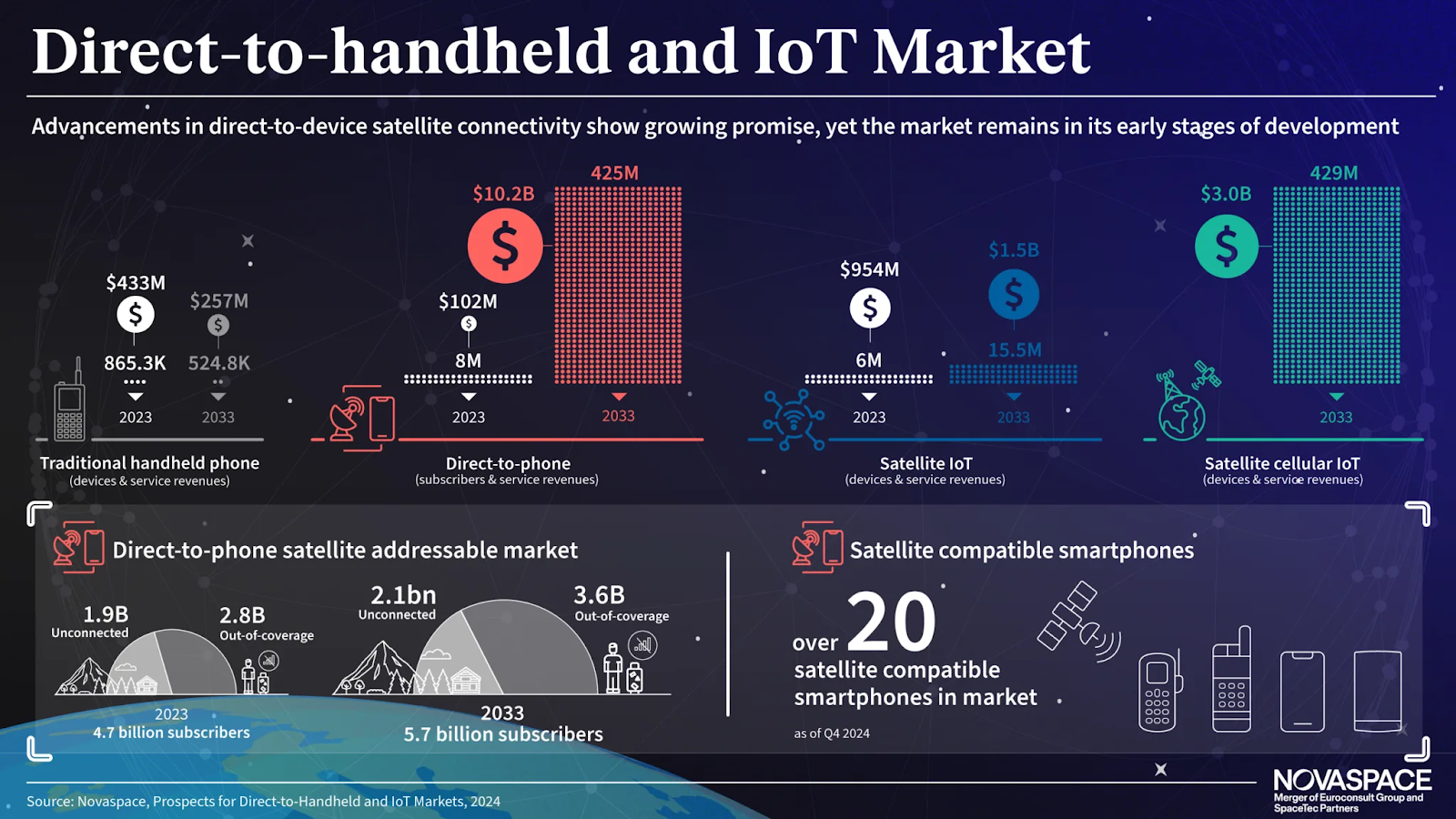
In the spirit of expanding connectivity, Direct-to-Device (D2D) communication has recently garnered significant attention. D2D has the potential to provide crucial, supplementary communications for the unconnected by utilizing satellites, thus eliminating the need for traditional cell towers or ground stations. It offers robust connectivity in two primary ways: direct Service, providing service to the device through its own dedicated spectrum; and supplemental coverage, providing coverage from space by utilizing the licensed spectrum of an existing terrestrial carrier.
While companies like T-Mobile have established partnerships with space companies for supplemental D2D services, other satellite operators are actively seeking to provide their own independent services. All of these use cases contribute to creating resilient, location-independent connectivity. The future of D2D will be determined by Agenda Item 1.13 will consider studies for future spectrum allocations for D2D. This single agenda item is pivotal, as its outcome could dictate the trajectory of the D2D market, which is projected to grow to $15 billion by 2033. The framework and operational parameters for distribution partners and service providers will be fundamentally determined by the results of this agenda item.
Securing the Lunar Economy
The concept of a lunar economy is no longer science fiction but a rapidly developing reality. In support of NASA’s Artemis program, companies such as SpaceX and Blue Origin are engaged in a new race to the Moon. Unlike previous visits, the current objective is to establish a long-term, sustainable presence. This necessitates a robust communications infrastructure which is addressed by Agenda Item 1.15. This item will consider space-to-space allocations essential for the future development of communications both on the lunar surface and between lunar orbit and the surface.
In essence, this agenda item is a critical enabler for the future lunar economy, which is expected to reach a value of $170 billion by 2040. As numerous countries and private entities aspire to participate in this market, establishing the correct communications infrastructure is paramount for ensuring a safe and thriving lunar economic environment, mirroring the importance of such infrastructure on Earth. Any company or nation with a vested interest in the lunar economy must act decisively now by engaging in their respective regional preparatory meetings.