Enabling Semiconductor Manufacturing in Space

Congress recently introduced the Semiconductor Superiority Act, which would expand the CHIPS and Science Act tax credits to include semiconductor manufacturing in space. Through the Act, Congress is positioning the U.S. to lead a technological shift that will revolutionize commercial space and compute capabilities.
While the semiconductor industry is now worth nearly $775 billion and is expected to double by 2030, the downstream economic impacts of advanced chip manufacturing is in the trillions. And as the AI boom creates an immense demand for even more advanced chips, one of the largest impediments to evolution is now the effect of Earth’s gravity during the manufacturing process.
Nearly all advanced manufacturing utilizes the manipulations of liquids and gasses, such as molten silicon. The effects of gravity can lead to issues with sedimentation, differences in material densities, hydrostatic pressure effects, and more, which can lead to impurities and defects in the final product. Reducing these effects will become even more important as the industry looks to move beyond silicon for next generation semiconductors, utilizing materials such as diamond, graphene, silicon carbide (SiC), and gallium nitride (GaN). The microgravity environment of low Earth orbit (LEO) allows manufacturers to circumvent many of these issues, resulting in crystals that grow twice as fast, twice as large, with up to 1000 times fewer defects than those grown terrestrially.
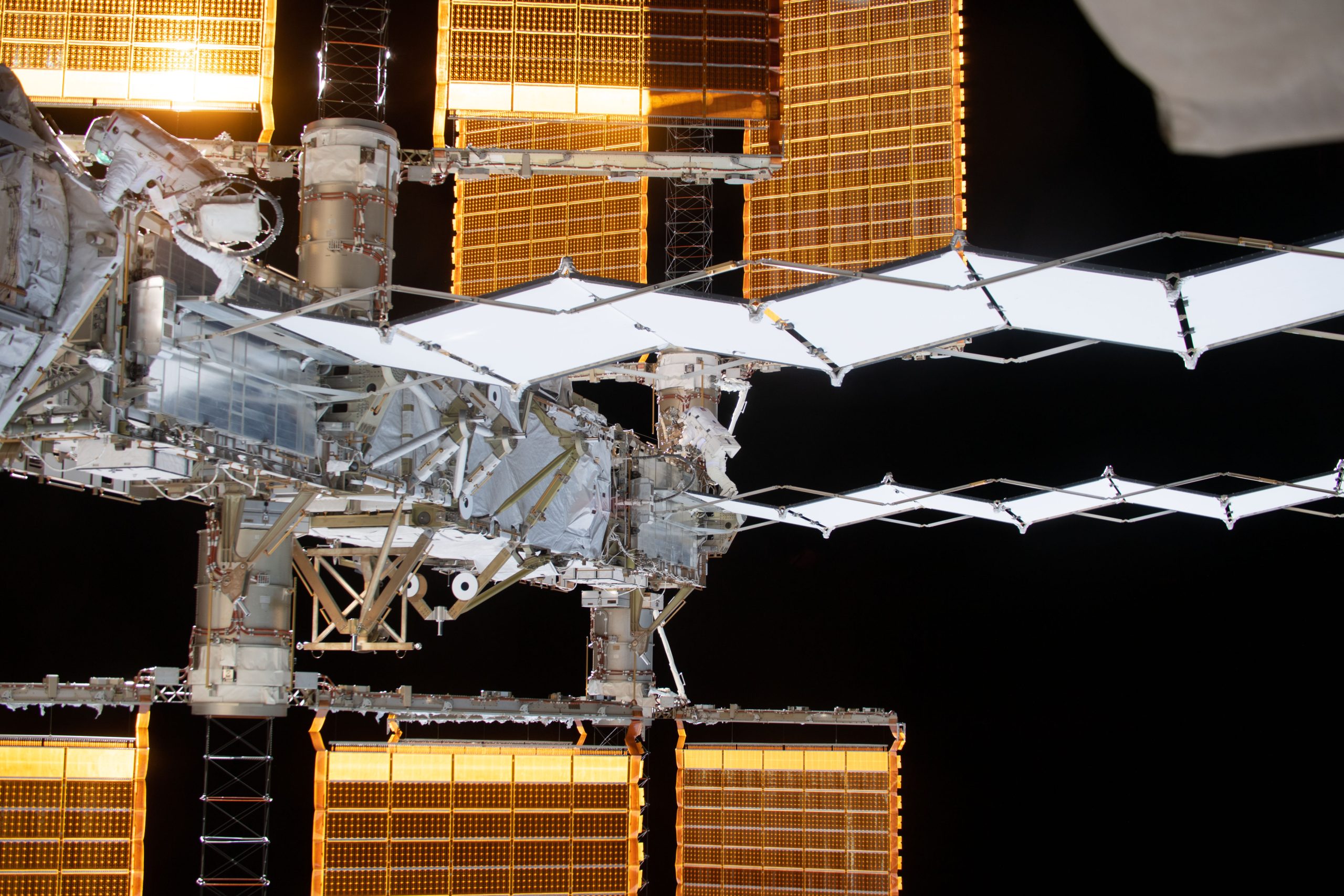
The idea of manufacturing semiconductors in space isn’t new. The first experiment to grow a semiconductor crystal in space occurred in 1973 aboard Skylab, and research has continued at a steady pace since then. However, one of the biggest barriers to advancing research in the field is the lack of adequate facilities in LEO. While the International Space Station (ISS) has two furnaces capable of reaching the temperatures needed for semiconductor manufacturing, only one of the furnaces can sustain such high temperatures for the long periods of time necessary for manufacturing. And with the ISS set to be decommissioned by the end of 2030, the U.S. is about to lose its ability to conduct advanced research just as the technology is approaching maturity.
Meanwhile, China has rapidly increased its own capabilities with in-space semiconductor manufacturing. It became the first nation to create an integrated circuit using space-grown semiconductor crystals in 1996, and has now advanced its technology far enough to potentially begin integrating space-based chip fabrication into its supply chain. It is clear that the U.S. must take action to regain our technological leadership and to secure our semiconductor supply chain.
Enabling this future will require substantial buy-in from the public and private sectors. New investments will need to be made to enable the commercial space infrastructure required for in-space manufacturing, such as a final decision from NASA on commercial space station funding and grants for cutting edge material science research. The Semiconductor Superiority Act is a good first step towards encouraging further private sector investment, which would move the technology from Research and Development into full-scale operations. A light touch certification framework for novel space activities would provide additional regulatory certainty while supporting an innovative and sustainable space economy. Finally, in order to enable more rapid experimentation and routine production in space, the U.S. launch and re-entry ecosystem should undergo a shift to support a higher cadence of operations.
The next generation of AI frontier models will be defined by hardware forged in the final frontier of space. By taking advantage of the orbital environment, we will secure the next generation of high-performance compute while also building the industrial backbone for the commercial space economy.