Main takeaways
- Europe risks losing a €1.2 trillion GDP opportunity if the EU’s top court restricts data-mining practices that are essential for training modern AI models
- If the CJEU’s ruling introduces licensing frictions, this would create a ‘compliance tax’ hitting SMEs and startups hardest, while global competitors move ahead
- Rather than rushing into new restrictions, the EU should focus on effectively enforcing the existing Copyright Directive and AI Act, allowing them to function as intended
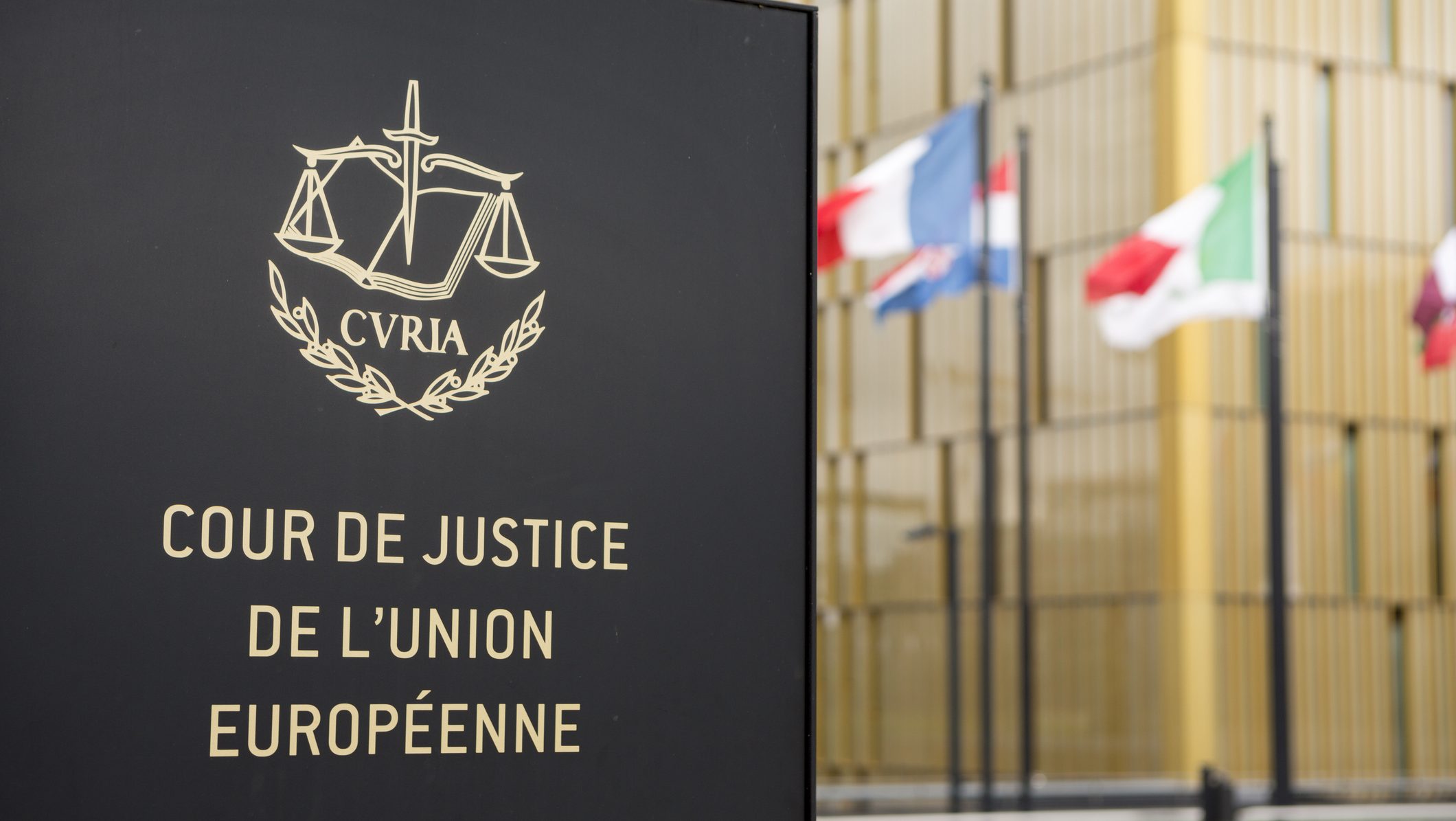
On 10 March, the Court of Justice of the European Union (CJEU) will hold the first public hearing in the ‘Like Company v. Google Ireland’ case. In brief, the case was brought by a Hungarian news publisher, which claims that the Gemini AI chatbot infringed its rights by allegedly copying news articles without permission.
In reality, AI systems do not reproduce exact articles; they generate responses by predicting likely words and patterns based on vast amounts of training data. This case isn’t just another legal technicality. It represents the Court’s first real engagement with the intersection of generative AI and copyright, the implications of which extend far beyond the courtroom.
For too long, the European conversation around AI has been trapped in a narrow copyright ‘cul-de-sac’ – despite the EU already having a unique set of rules in place that guarantees a careful balance between the interests of rightsholders and those of innovators and society.
Under current European rules, developers can use copyright-protected works to train AI through the Copyright Directive’s text-and-data-mining (TDM) exception – provided the information is publicly available and the rightsholder has not opted out, a right they may always exercise.
The TDM exception is not only about chatbots or AI; it is crucial for a broad range of other applications in healthcare, legal research, and journalism. As acknowledged by the Copyright Directive, TDM is widely used “by private and public entities to analyse large amounts of data in different areas of life and for various purposes, including for government services, complex business decisions and the development of new applications or technologies.”
The law is crystal clear on this, yet the EU debate still has to catch up with today’s realities, often framing AI training as an impossible choice between rightsholders and innovation. If Europe continues to view TDM only through a restrictive, litigation-heavy lens, we risk ruling out the very tools essential for future growth.
1. The competitiveness gap: An existential threat
Mario Draghi’s landmark report was clear: the innovation and productivity gap between the European Union and its global peers poses an existential threat. And AI is the single most powerful technology available to help close that gap.
Generative AI systems – which can create new text, audio, images, video, and code from scratch – could add between €1.2 and €1.4 trillion to Europe’s GDP within a decade. Yet, while debates over new restrictions on AI training in the EU continue, Europe’s adoption is lagging behind. Currently, only 14% of European businesses use AI, a figure dwarfed by firms in the US and China.
From hospitals deploying advanced diagnostics to farmers using precision agriculture, every modern sector is set to become a downstream user of TDM-enabled innovations, which are not limited to AI. Restricting data mining, therefore, does not just hinder AI model developers; it increases costs and limits possibilities for every European business.
2. Why TDM restrictions will hit the EU economy at large
In practice, a restrictive or mandatory licensing regime will impose a ‘compliance tax’ that affects European industry across many sectors – from healthcare and manufacturing to research and science. Draghi’s report also highlights a stark divide: while 29% of large EU firms have adopted AI, only 7% of SMEs have done so. Adding licensing friction would only further widen this gap. A handful of big companies might manage to negotiate complex licences with major publishers, but European AI startups would be priced out of the market, placed at a significant disadvantage compared with global competitors.
We must also address persistent misconceptions clouding this debate. For instance, the notion of ‘memorisation’ is often mistaken for copyright reproduction. In reality, it is a rare occurrence where an AI model produces output that appears to closely resemble a fragment of its training data. Treating this technical anomaly as the standard function of AI stifles the very innovation that enables models to learn patterns effectively.
3. Implementation over intervention: Allow the rules to do their job
Europe should let its existing copyright rules function as intended. We already have a balanced, coherent framework: Article 4 of the 2019 Copyright Directive provides clear TDM exceptions, while giving rightsholders the power to opt out. The AI Act adds additional transparency and compliance obligations in this regard.
The majority of EU Member States agree that new legislation is unnecessary at this point, favouring careful monitoring and proper implementation of existing laws instead. And the European Commission has also emphasised before that the Copyright Directive is fit for the AI era and does not require specific legislative interventions.
We can therefore only hope that the CJEU’s forthcoming ruling in the ‘Like Company v. Google Ireland’ case will provide the clarity Europe needs, confirming that the current framework is robust and clear, rather than generating fresh uncertainty.
Conclusion
While Europe debates tightening the screws, our global competitors are moving ahead. The US relies on the ‘fair use’ doctrine for AI training, Japan maintains one of the world’s most permissive TDM regimes, and both Singapore and Israel have crafted frameworks that actively encourage AI innovation.
Creators’ rights are legitimate and must be respected – the EU’s TDM opt-out mechanism exists precisely for that reason. But those protections must be balanced against Europe’s collective economic future. As the CJEU prepares to hear the arguments on 10 March, Europe’s focus should be unapologetically forward-looking: ensuring the rules empower innovation, sustain growth, and keep Europe at the forefront of the AI era.