
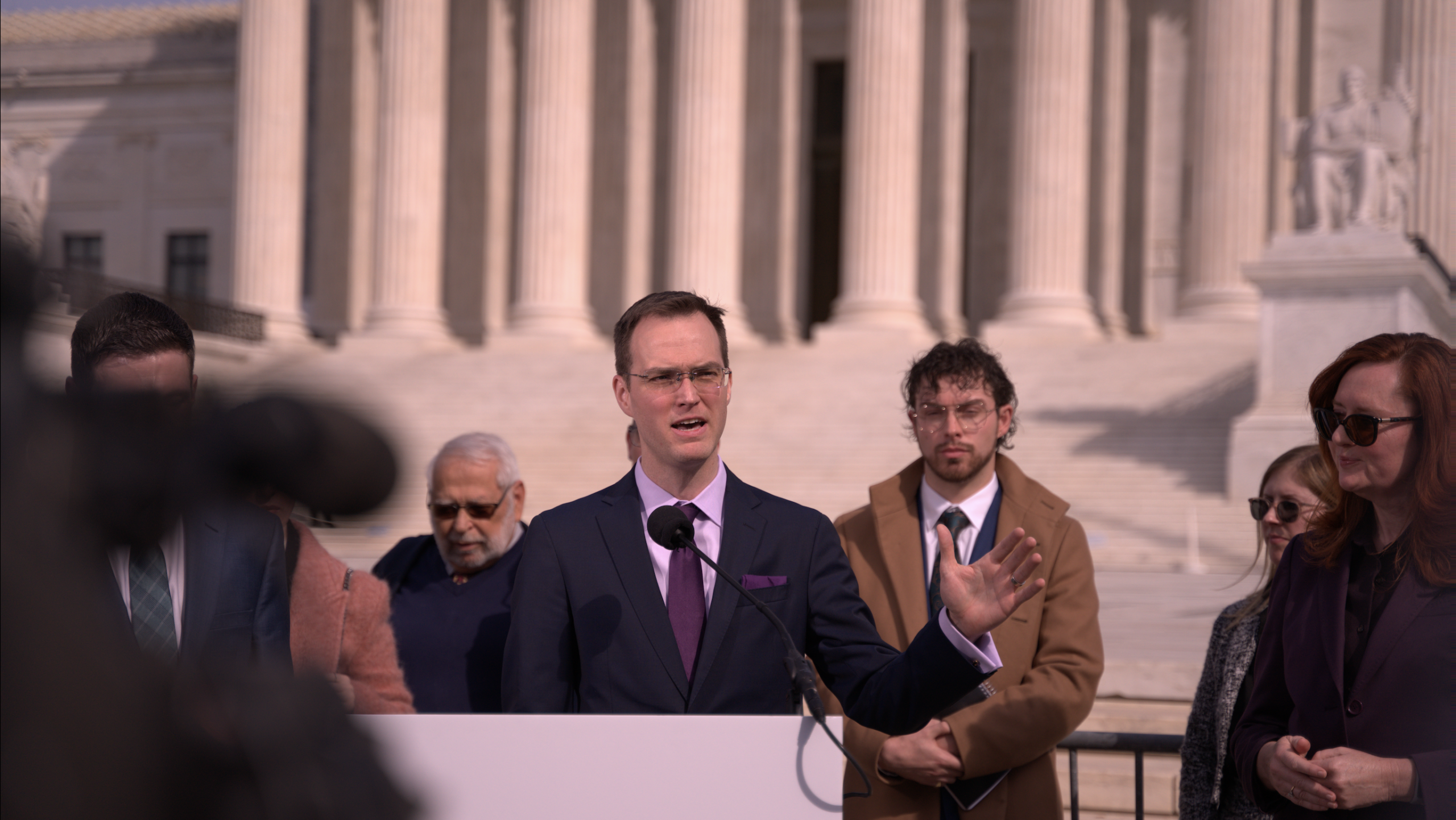
As we commemorate the 250th anniversary of the United States, few of our nation’s principles have proven to be more consequential than the First Amendment. The intellectual bedrock of the world’s leading democracy, it ensures that today — thanks to technology — Americans can speak, publish, and be heard at a scale the founders could scarcely have imagined. That freedom faces growing threats, including recently enacted state laws that would empower the government to compel speech, laws CCIA has challenged all the way to the Supreme Court.
In the mid-1700s, British authorities often censored colonial newspapers including the Pennsylvania Gazette, which Benjamin Franklin had previously owned. By the revolutionary era, the founders understood that a right to publish or speak without government interference also must encompass the right to hear, and the right not to speak.
This protection ensures that the “marketplace of ideas” is shaped by private citizens and communities, rather than the state. Today, this means that businesses from newspapers to online services are free to deliver content and information relevant to their readers and users without fear of government interference.
The Supreme Court affirmed this principle in 1974 in Miami Herald v. Tornillo — striking down a Florida law that would have forced newspapers to print politicians’ replies to their critics. Fifty years later, Florida would test this principle again, in an attempt to force websites to publish user speech that violates their terms of service.
In 2020 and 2021, Florida and Texas enacted laws aimed at forcing social media companies to display all viewpoints equally. Bizarrely, this would require services to give “Death to America” equal footing as “God Bless America.” What Florida sought in practice was to shield site users — and politicians in particular — from any consequences for violating a private website’s rules.
Not only does this get the First Amendment backward — it protects the public from the state, not the state from the public — but the right of free speech has never meant speech free of any consequences. It is precisely because speech can be consequential that we protect it. Speech can move public opinion, and shape how communities see their shared challenges and goals. It can also change how communities perceive the speaker: a patron’s inappropriate speech might get them uninvited from a family establishment. When that happens, or when a website blocks a political candidate for posts that violate site rules, that’s not a First Amendment problem. It’s the First Amendment at work.
When social media companies enforce policies against medical disinformation, conspiracies to undermine election integrity or even harmful teen-targeted internet challenges, they are not abridging their users’ free speech rights. They are exercising their own constitutional right to make editorial judgments, the same judgments newspapers have always made. The recourse for readers and users who disagree with the editorial choices of a newspaper or website is to read the competition.
This is why CCIA, together with NetChoice, challenged the Florida and Texas laws on First Amendment grounds: the government cannot force private businesses to speak or to disseminate others’ speech. In July 2024, in Moody v. NetChoice, the Supreme Court vindicated the core of our argument: content moderation is editorial judgment protected by the First Amendment, and a state may not interfere with private speech to advance, in the Court’s words, “its own vision of ideological balance.” The Court returned the cases to the lower courts for further proceedings, and the laws remain enjoined.
On this 250th anniversary milestone, we honor the enduring American guarantee of free expression: the freedom to speak, the freedom to listen, and the right not to be compelled by the government to say anything at all.