The Next Age of Connectivity
Today, millions of Americans use their digital devices to play, learn, connect with friends and family, and work. And while digital connectivity offers great opportunities, not everyone has access to them.
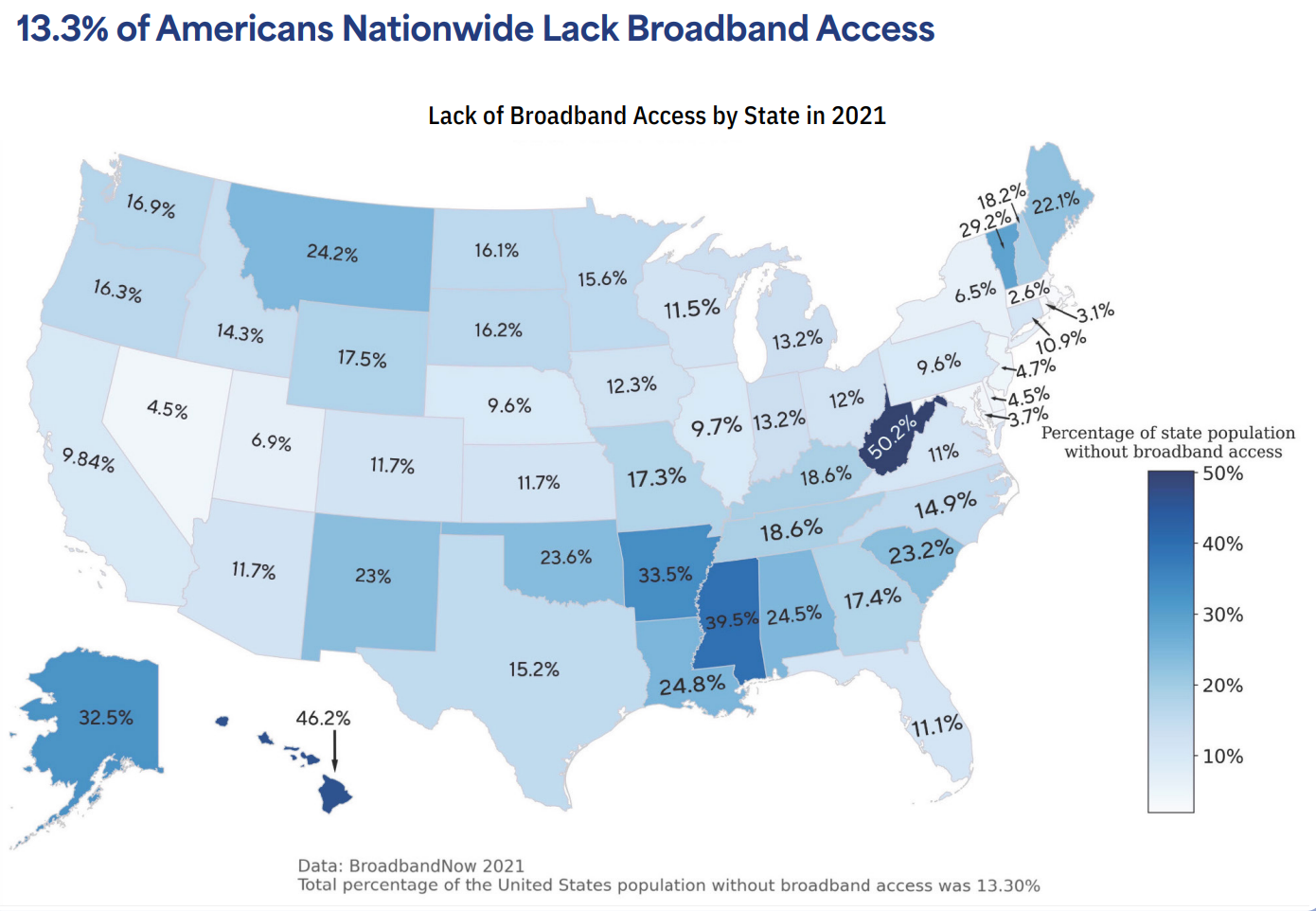
In the U.S., there are an estimated 43.7 million of Americans without access to reliable broadband. This means, we are leaving 13% of Americans without one of the strongest tools for connection and growth.
Access to high-speed internet has a clear impact on economic growth in rural communities. A recent study by the Center on Rural Innovation found that counties with high broadband access saw their per capita income grow 18% faster—or 1.8 percentage points higher—than counties with lower access in just two years. For residents, this translates to an average increase of nearly $500 per person annually.
Conversely, counties with limited broadband access are seeing their economies fall behind. These communities experienced 1.4 percentage points lower per capita income growth and 2.7 percentage points lower GDP growth than similar areas with better internet access.
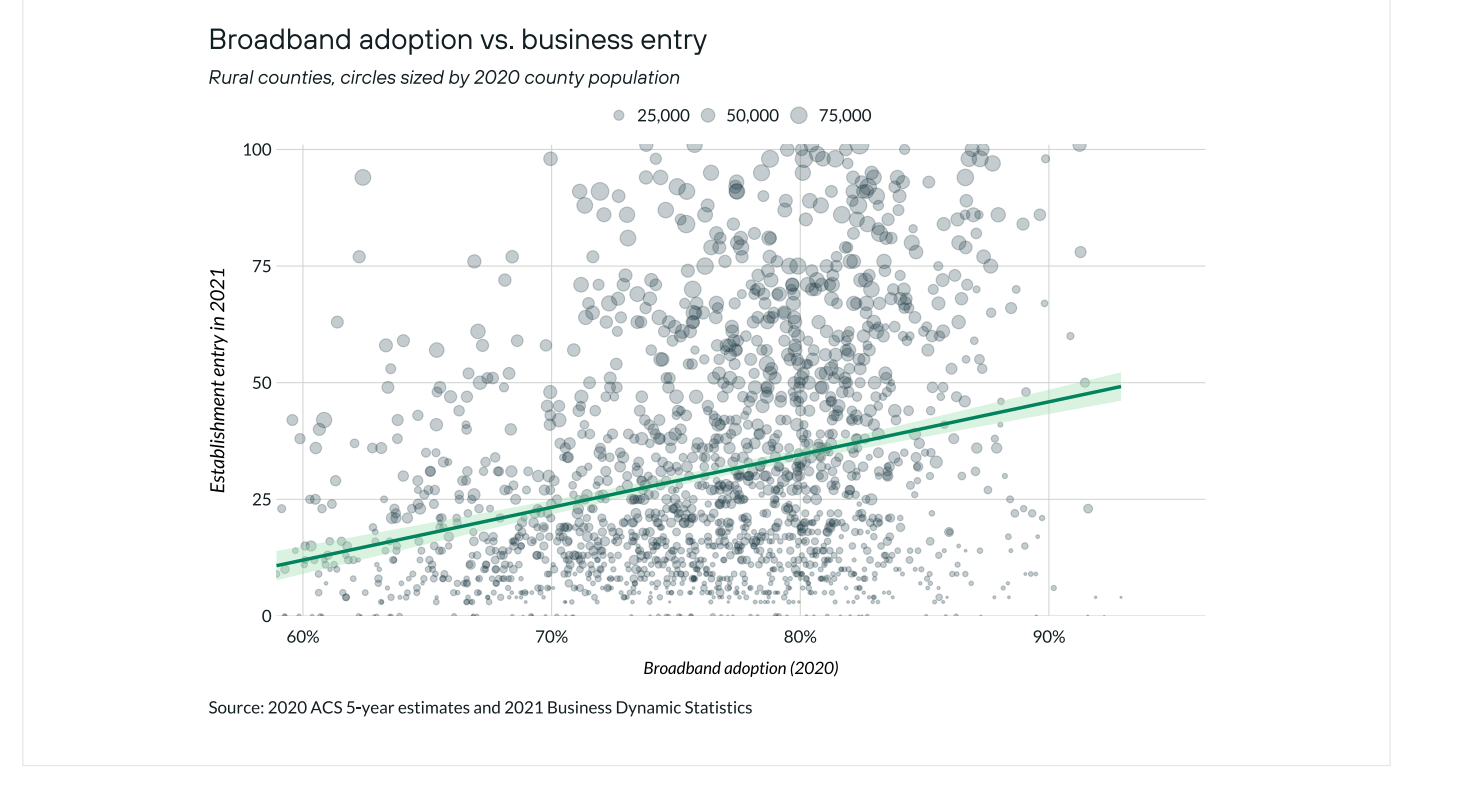
Without access to connectivity, people can lose access to job opportunities, education, and business development. In a case study of Bullock County Georgia, with poverty rates above 20% for over 30 years, saw an establishment of 150 businesses with an increase in broadband accessibility. This was with connectivity with fiber, but additional providers can reduce prices and increase market availability. And this is not a stand alone case, per the image below, one can see the trend between new businesses and broadband adoption.
While the benefits of connecting people are massive, they are overshadowed by the argument on how to connect them. However, to connect everyone the U.S. needs a multi technology solution that can allow for redundancy in connectivity.
Low-earth-broadband can offer solutions where fiber is not feasible as well as a back up for fiber. For example, in cases where man-made or natural disasters occur, ensuring continued connectivity can save people and lives.
The U.S. government recognized the need for multiple technologies when satellites were included in the Broadband Equity, Access, and Deployment (BEAD) program, which allocates $42.45 billion to connect every American to high-speed broadband Internet access. Initially, the program prioritized a fiber-first approach, but it now allows for a technology-neutral approach, letting different technologies compete.
Under the new rules, satellite providers could compete to offer broadband service that reaches those in underserved regions. Satellite broadband providers like Amazon’s Project Kuiper and SpaceX’s Starlink submitted their competitive BEAD proposals to various states. These providers can meet the technical requirements and have lower entry costs. Further, this technology is still in its infancy, it will grow to be faster and more reliable, offering strong competition to traditional approaches to connectivity. The results of the BEAD program are currently unrolling and can be tracked here.
Ultimately, connecting people through satellite and fiber will ensure the continued development of the United States and its people.