
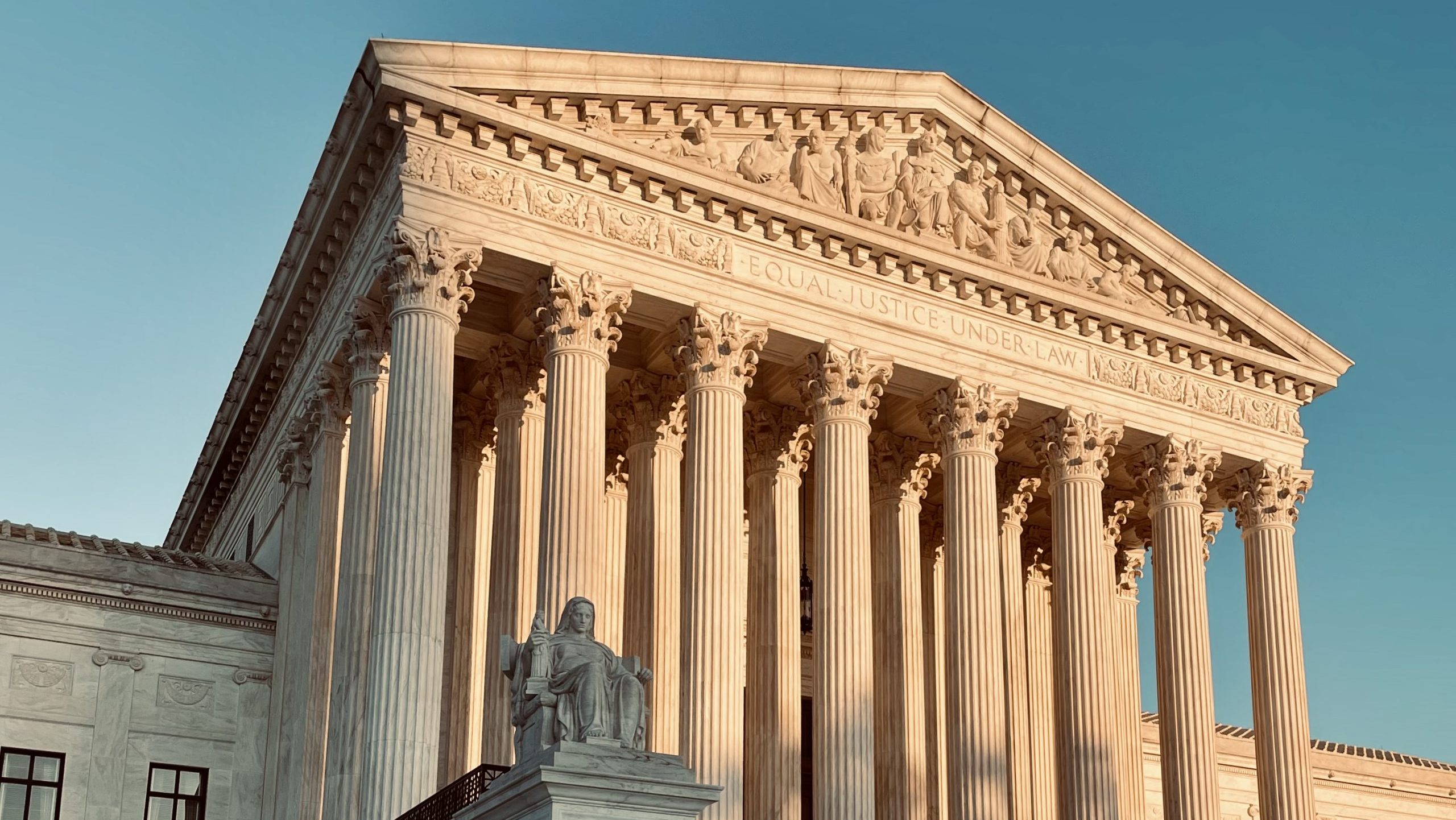
Supreme Court Justice David Souter passed away on May 8, 2025, leaving behind a significant copyright legacy: authorship of Campbell v. Acuff-Rose and MGM v. Grokster, two of the most consequential copyright opinions of the past 50 years. Interestingly, in both opinions he cleared up uncertainties created by the Supreme Court in Sony v. Universal six years before he joined the Court.
Sony v. Universal (1984)
In Sony, the Court held that the manufacturer of a technology that could be used to make infringing copies—here, Sony’s Betamax video tape recorder—was not liable for contributory copyright infringement if the technology was “capable of commercially significant noninfringing use.” The Court further held that consumers’ recording of over-the-air television broadcasts for later viewing—what the Court called time-shifting—was a fair use. Because the Betamax was capable of this substantial noninfringing use, Sony was not liable for contributing to potentially infringing uses, such as users’ archiving of television broadcasts.
In its explanation of why time-shifting was a fair use, the Sony Court stressed that the time shifting by consumers was noncommercial. In contrast, “if the Betamax were used to make copies for a commercial or profitmaking purpose, such use would be presumptively unfair” under the first fair use factor, the purpose and character of the use. Similarly, the Sony Court stated that if “the intended use is for commercial gain,” the likelihood of significant market harm “may be presumed” in connection to the fourth fair use factor, the effect of the use on the market for the work. These “presumptions” soon took on a life of their own in the lower courts. The courts interpreted the language as establishing a bright line that commercial uses were unfair.
Campbell v. Acuff-Rose (1994)
Justice Souter made clear that there were no bright lines in fair use in Campbell v. Acuff-Rose, a case considering whether 2 Live Crew’s parody of the Roy Orbison classic Oh, Pretty Woman was a fair use. He stated that “Sony itself called for no hard evidentiary presumption.” He quoted a footnote in Sony where the Court stated that Congress had “eschewed a rigid, bright-line approach to fair use.” He criticized the Sixth Circuit in Campbell for “elevating one sentence in Sony to a per se rule….” Instead, Sony simply stands for the proposition that the commercial nature of a use is a factor that tends to weigh against a fair use finding. Further, Justice Souter rejected a presumption or inference of market harm in “a case involving something beyond mere duplication for commercial purposes.”
In limiting the impact of Sony’s “presumptions,” Justice Souter relied heavily on a 1993 law review article by William Patry and Shira Perlmutter (who has been in the news lately). The article criticized the tendency of lower courts in fair use cases to seek bright lines “in the language of the statute or in broad statements in prior opinions.” The result of this tendency has been “mechanistic, formulaic decisions—opinions that recite sonorous phrases drawn from statute and case law rather than engage in the sensitive balancing of factors that is the essence of fair use.”
Justice Souter also relied on another article, by Judge Pierre Leval, that argued that the heart of the inquiry under the first fair use factor was “whether and to what extent the new work was ‘transformative.’” By adopting the transformative use approach advocated by Judge Leval, Justice Souter completely changed fair use jurisprudence. The starting point of nearly every fair use inquiry since Campbell has been the transformative nature of the use.
MGM v. Grokster (2005)
Eleven years after writing the Campbell opinion, Justice Souter resolved another uncertainty created by Sony: the proper application of the “capable of commercially significant noninfringing use” test. In copyright litigation concerning a wide variety of digital technologies, the technology distributors argued that under Sony, they had no secondary liability for the widespread infringements made with their products or services so long as the technology was capable of commercially significant noninfringing use. The Ninth Circuit agreed with reading of Sony in MGM v. Grokster, notwithstanding evidence that the developers of the Grokster file sharing software intended for the software to be used for infringing purposes.
In his opinion for a unanimous Court, Justice Souter reversed the Ninth Circuit by importing the inducement theory of secondary liability from the Patent Act. He wrote that “one who distributes a device with the object of promoting its use to infringe copyright, as shown by clear expression or other affirmative steps taken to foster infringement, is liable for the resulting acts of infringement by third parties.” He addressed Sony by interpreting it far more narrowly than the Ninth Circuit. He found that Sony prohibited “presuming or imputing intent to cause infringement solely from the design or distribution of a product capable of substantial lawful use, which the distributor knows is in fact used for infringement.” However, a distributor could still incur liability if there was clear evidence that it intended to cause infringement, even though its technology was capable of substantial lawful uses.
* * * *
In Grokster, Justice Souter fashioned a pragmatic interpretation of the Sony rule that both copyright owners and technology distributors have been able to live with for the past twenty years. Likewise, his pragmatic interpretation of Sony’s “presumptions” in Campbell has enabled lower courts to “engage in the sensitive balancing of factors” called for by Patry and Perlmutter. This pragmatism is also evident in his communications with other Justices as he crafted opinions they could join. Justice Souter’s practical, non-dogmatic approach suggests that these opinions will continue to guide copyright for decades to come.